Celsius to Fahrenheit: Temperature vs. Temperature Change
A temperature of 10 °C is 50 °F, but a rise of 10 °C is 18 °F. Learn which conversion formula to use and check the difference step by step.
4 min read
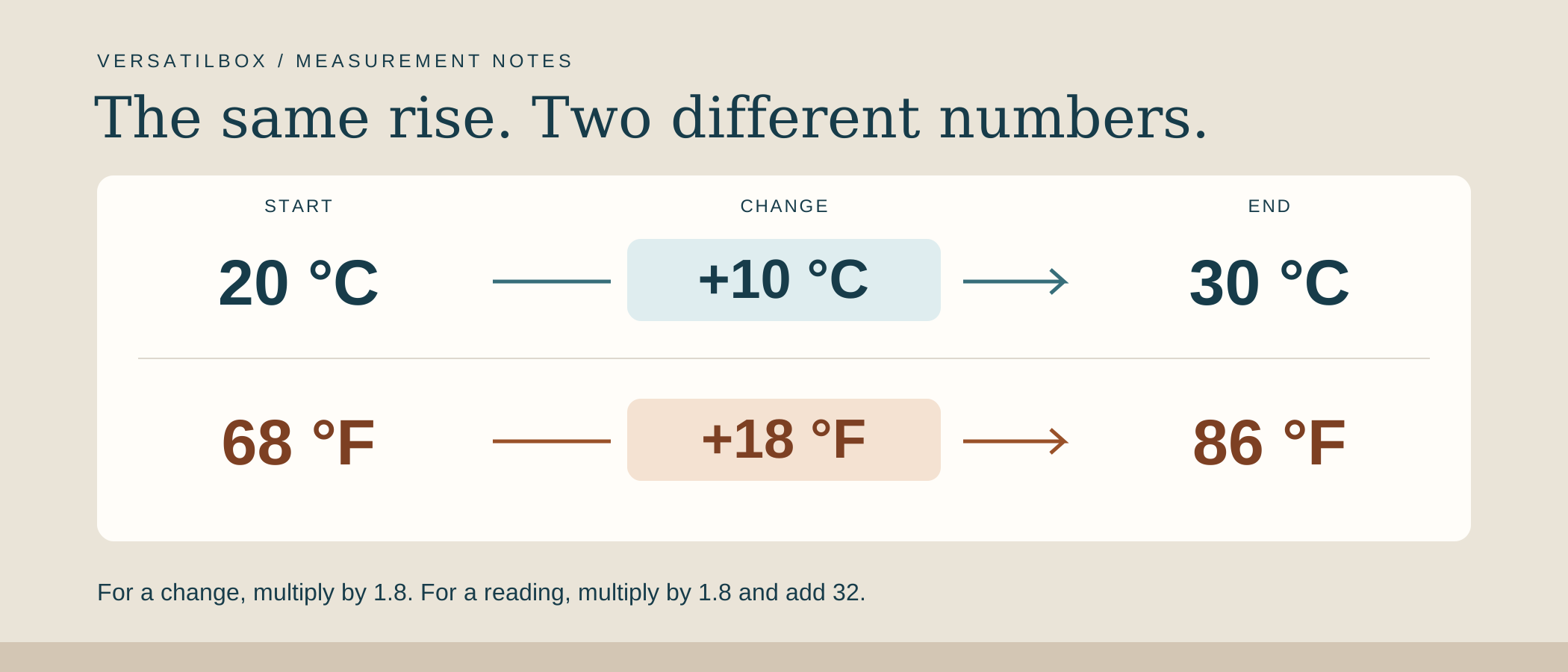
To convert a Celsius temperature to Fahrenheit, multiply by 1.8 and add 32. To convert a Celsius temperature change, multiply by 1.8 only. A reading of 10 °C is 50 °F; a rise of 10 °C is a rise of 18 °F.
That distinction matters when you compare a forecast with yesterday’s weather, report how much a sensor reading moved, or display a temperature difference in a dashboard. A converter can return the correct answer to the wrong question if you enter a change as though it were a thermometer reading.
Celsius to Fahrenheit: Which Formula Do You Need?
For a temperature reading, use:
Fahrenheit = Celsius × 1.8 + 32
For a difference between temperatures, use:
Change in Fahrenheit = change in Celsius × 1.8
The NIST temperature reference gives the exact reading conversion and specifies that an interval of one Celsius degree corresponds to 1.8 Fahrenheit degrees.
Look at the words around the number. “The room is at 10 °C” describes a reading. “The room warmed by 10 °C” describes a change. The units look identical, but the sentences call for different calculations. A range needs the same care: converting its endpoints gives you two new readings, while converting its width gives you an interval.
Why the +32 Disappears in a Temperature Difference
Celsius and Fahrenheit have different zero points, as well as different-sized degrees. The multiplication changes the size of the degree; adding 32 adjusts for the zero-point difference. For instance, 0 °C corresponds to 32 °F.
When you subtract two converted readings, both contain that same addition. It cancels out:
(1.8 × end + 32) − (1.8 × start + 32)
becomes:
1.8 × (end − start)
This is why a change of zero degrees remains a change of zero degrees in the other scale. Adding 32 to an interval would make “no change” look like a substantial increase. That is a useful quick check when a spreadsheet formula or dashboard value looks suspicious.
A Worked Example: From 20 °C to 30 °C
Imagine a sensor reports 20 °C in the morning and 30 °C later in the day. First, convert the two readings:
- Start: 20 × 1.8 + 32 = 68 °F.
- End: 30 × 1.8 + 32 = 86 °F.
Now subtract. The change is 30 − 20 = 10 °C, or 86 − 68 = 18 °F. Both describe the same physical increase.
You can reach the same result directly: 10 × 1.8 = 18. Entering 10 into a normal Celsius-to-Fahrenheit converter instead produces 50 °F, because the tool interprets the input as a temperature reading. The distinction belongs in the input, before any calculation takes place.
The rule also preserves decreases. A sensor falling from 28 °C to 23 °C has changed by −5 °C. Those readings are 82.4 °F and 73.4 °F, a change of −9 °F. Keep the negative sign when reporting a signed change, or write “a drop of 9 °F.”
Fahrenheit to Celsius for Temperature Changes
The reverse conversion follows the same distinction:
- Reading: subtract 32, then multiply by 5/9.
- Change: multiply by 5/9 directly.
A rise of 9 °F is therefore a rise of 5 °C. A drop of 18 °F is a drop of 10 °C. There is no zero-point adjustment when converting either interval.
NIST makes this separation explicit in its conversion-factor tables, which list temperatures and temperature intervals separately. Use the exact fraction 5/9 in a calculation when possible, then round the final result for display.
Celsius and Kelvin Differences Have the Same Size
The Celsius–kelvin relationship gives another way to check the idea. A temperature of 20 °C is 293.15 K, because the reading conversion adds 273.15. A temperature difference of 20 °C is 20 K: the units have the same interval size.
Again, subtracting two readings removes the shared offset. The Celsius difference and the kelvin difference have the same numerical value. NIST documents both relationships in the references above. Kelvin uses the symbol K, without a degree sign.
Check Both Readings in a Temperature Converter
Use the Celsius-to-Fahrenheit converter to convert the start and end readings separately, then subtract the results. This lets you check a change using the site’s standard temperature conversion without assuming the tool has a separate interval mode.
For a dashboard, label the values so a reader can tell them apart. “Temperature: 30 °C” and “Change since morning: +10 °C” communicate different quantities. Their Fahrenheit equivalents are “Temperature: 86 °F” and “Change since morning: +18 °F.”
Before converting, finish this sentence: “This number tells me the temperature is ___” or “This number tells me the temperature changed by ___.” Once that is clear, the choice of formula follows.